
 en
en


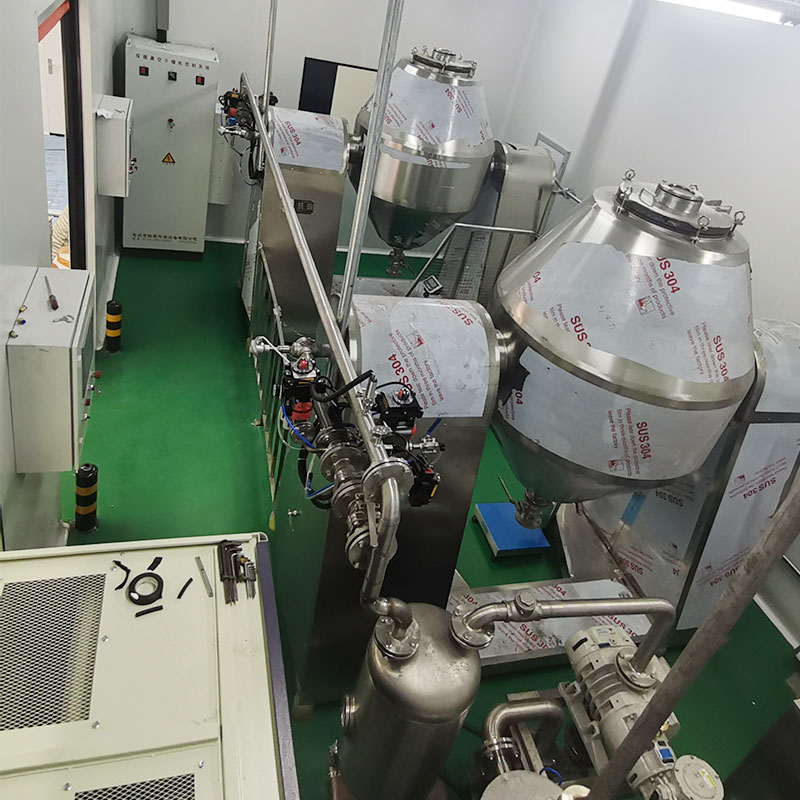
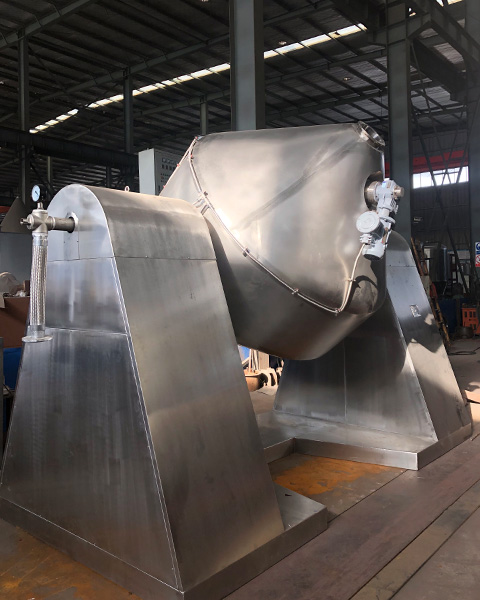
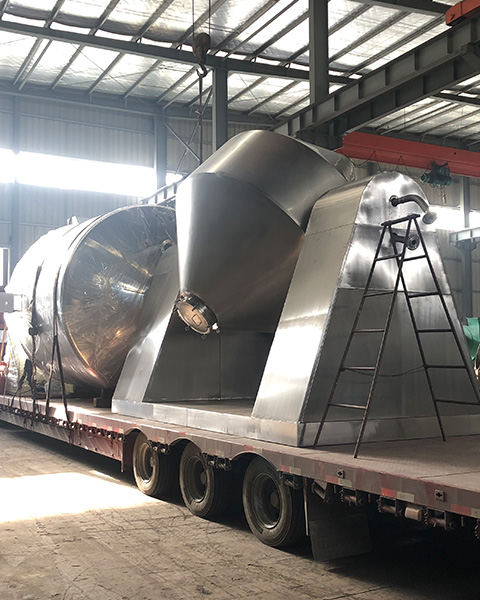
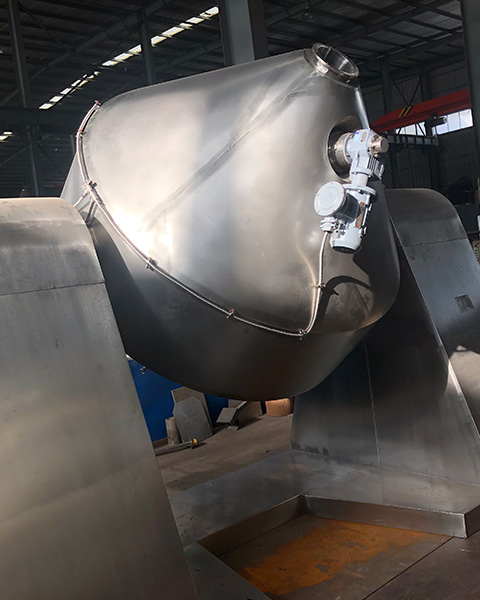
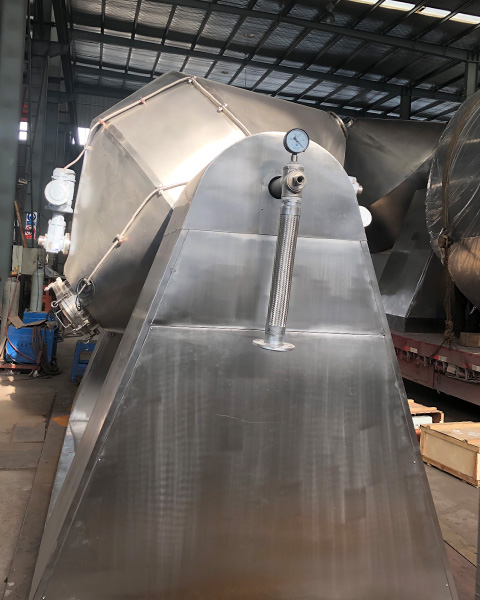
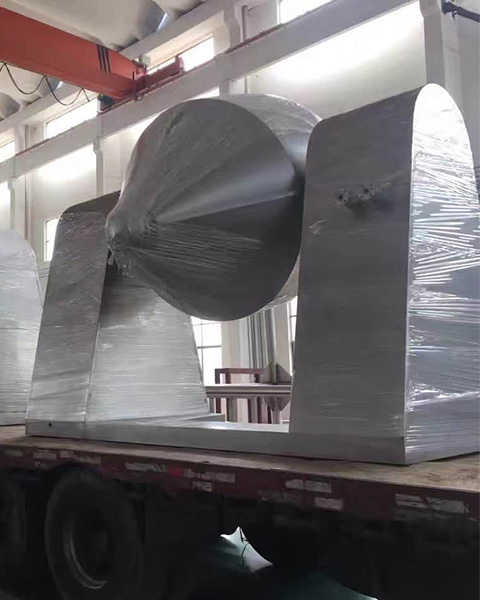
SZG-Double cone rotary vacuum dryer
product Overview
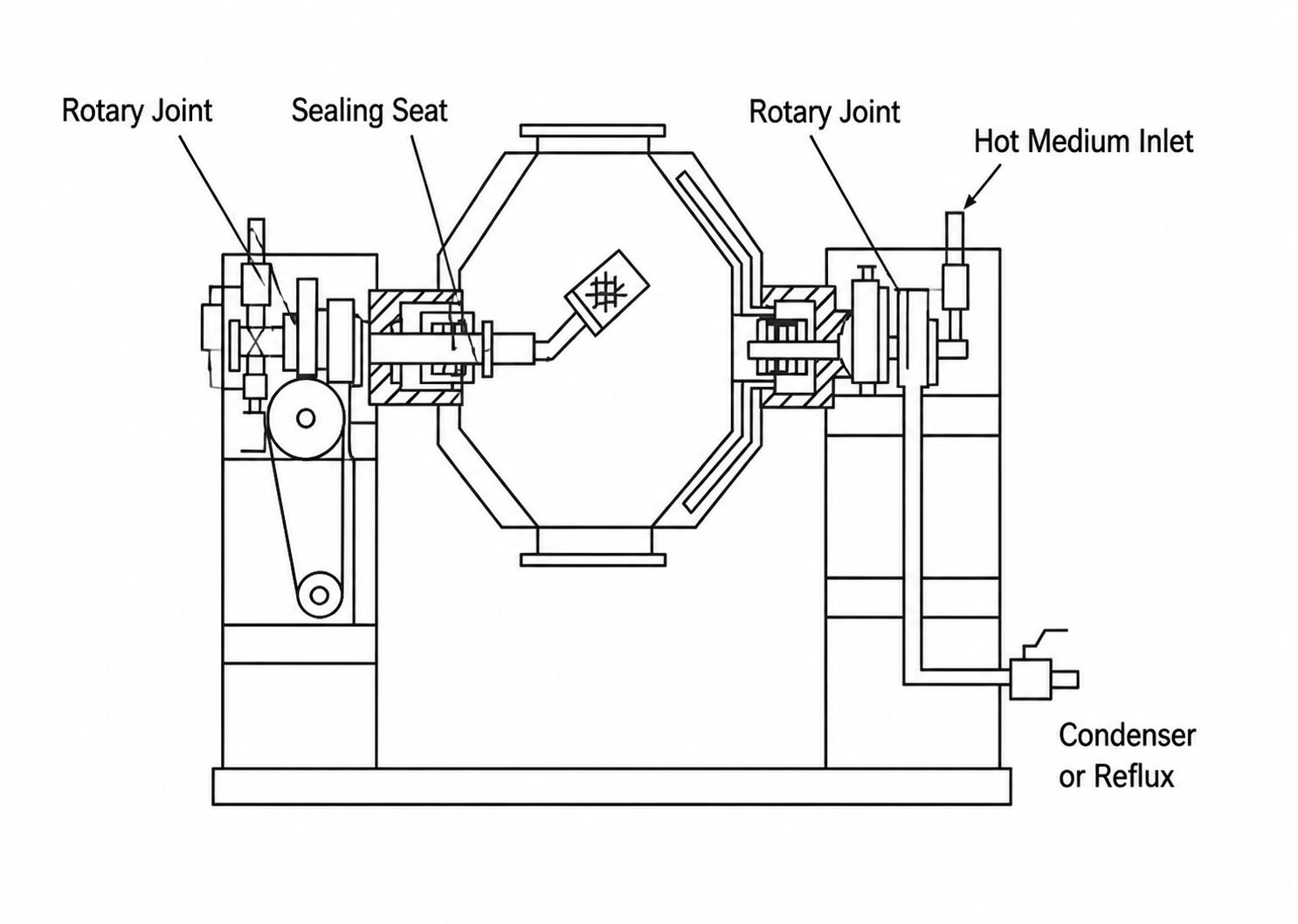
SZG double cone vacuum dryer is a new generation drying device developed by our factory based on the technology of similar domestic products. The double cone vacuum adopts two elastic connection methods of belt and chain, so the equipment runs smoothly. The specially designed process fully reflects the good concentricity of the two shafts. Both the heat medium and vacuum systems use reliable mechanical seals or rotary joints with American technology. On this basis, we developed SZG-A, which can not only stepless speed regulation, but also carry out constant temperature control.
As a professional drying equipment manufacturer, our factory's products range from high-temperature heat transfer oil as heat medium, medium-temperature steam and low-temperature hot water. When drying viscous materials, the factory will specially design a "plate copying" mechanism or set up rolling balls for you in the can.
working principle
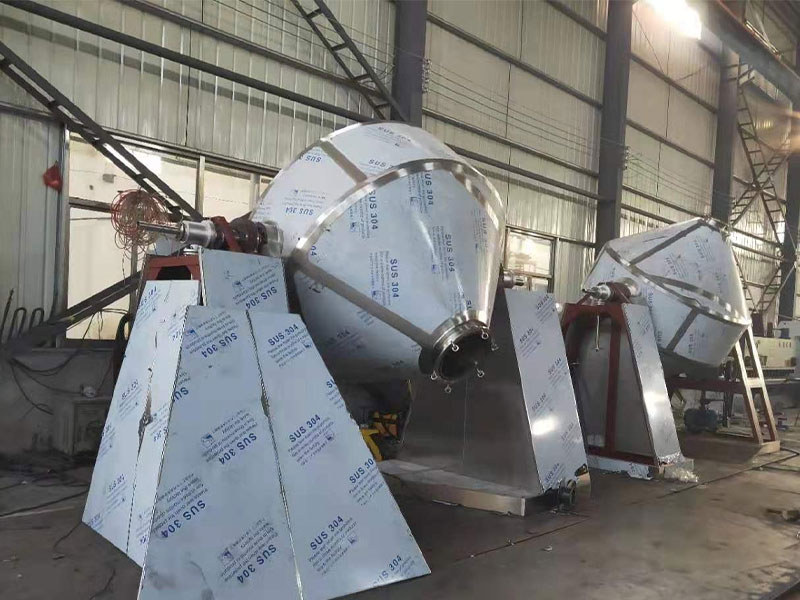
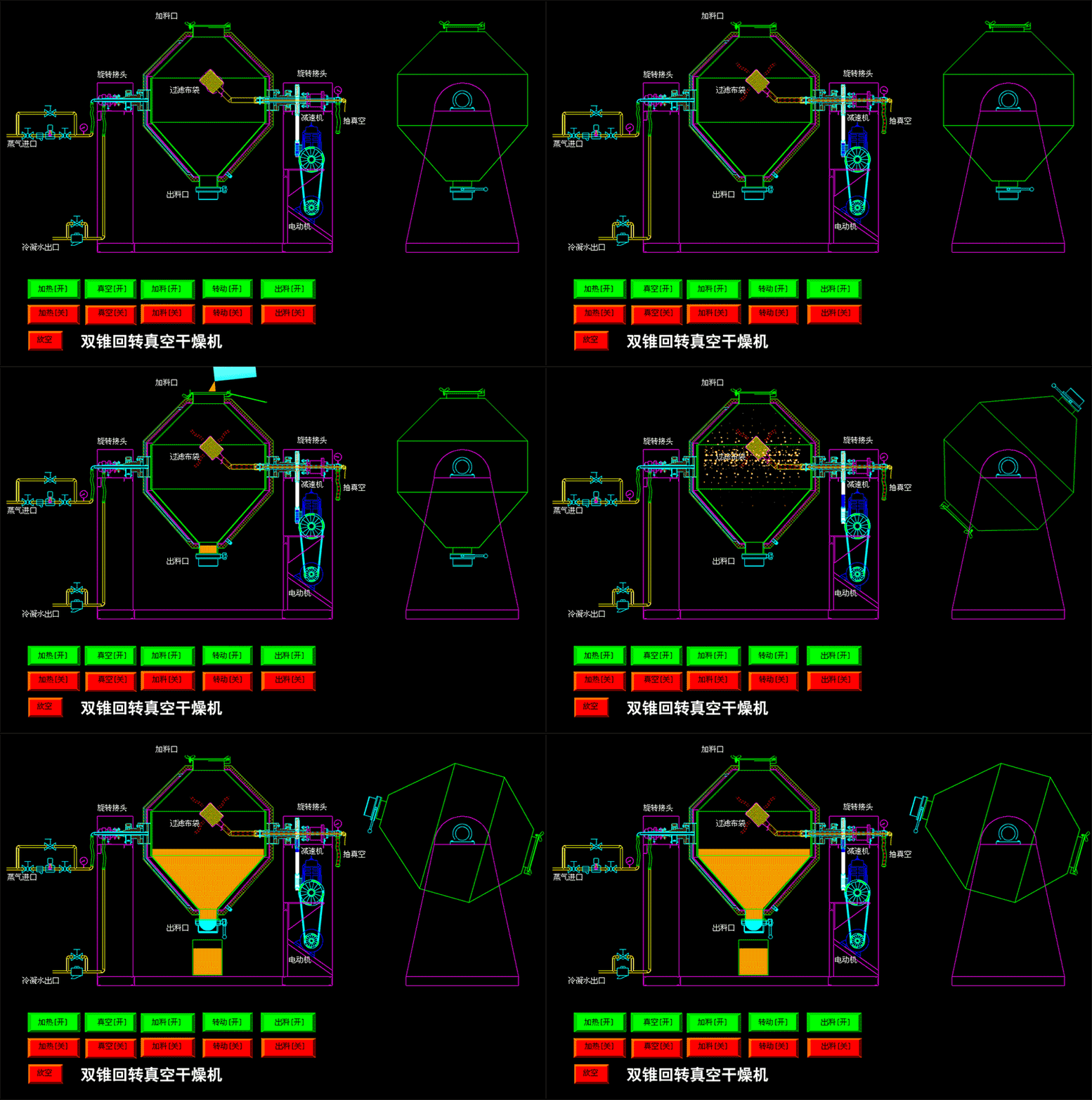
◎ Heat energy (such as hot water, low-pressure steam or heat transfer oil) is introduced into the enclosed interlayer, and the heat is transferred to the material to be dried through the inner shell.
◎ Driven by power, the tank body rotates slowly, and the materials in the tank are constantly mixed to achieve the purpose of enhanced drying.
◎ The material is in a vacuum state, and the vapor pressure drops so that the water (solvent) on the surface of the material reaches a saturated state and evaporates, and is discharged and recycled in time by the vacuum pump. The three processes of water (solvent) inside the material continuously penetrate into the surface, evaporate, and discharge continue, and the material achieves the purpose of drying in a short time.
Adapt materials
Suitable for concentration, mixing, drying of powder, granules and fibers in chemical, pharmaceutical, food and other industries and materials requiring low-temperature drying (such as biochemical products, etc.). It is more suitable for drying materials that are easily oxidized, volatile, heat-sensitive, strongly irritating, toxic and materials that are not allowed to destroy crystals.
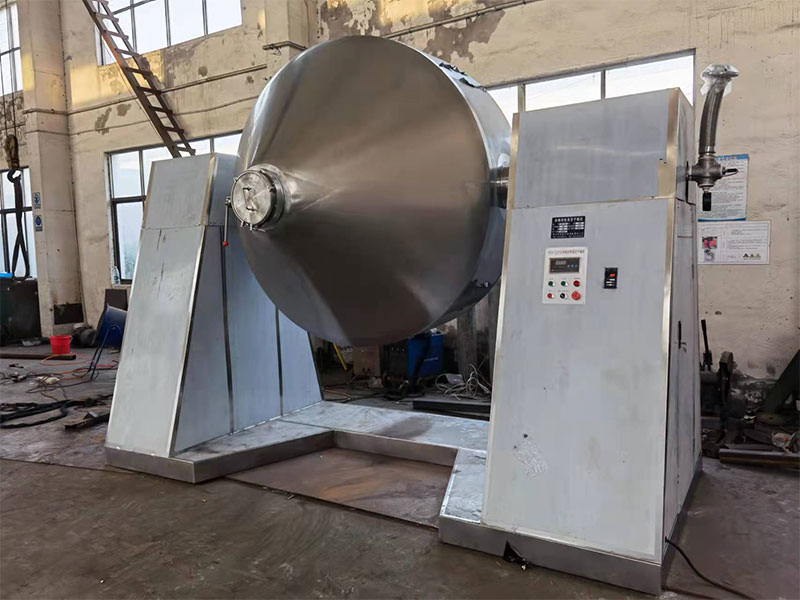
Installation demonstration
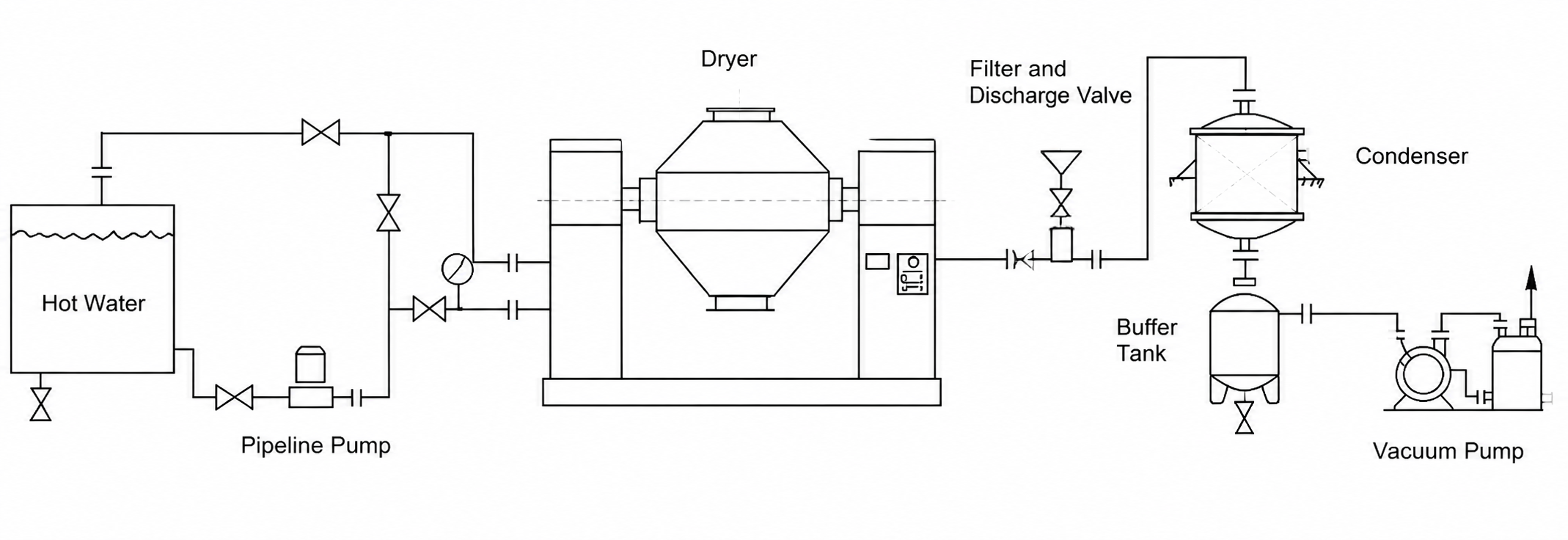
performance characteristics
◎ When the oil is heated. Adopt automatic constant temperature control. Can dry biochemical products
◎ and mineral raw materials, the temperature can be between 20 and 160 degrees CoBetween C.
◎ High thermal efficiency, more than 2 times higher than that of ordinary ovens.
◎ Indirect heating. Materials will not be contaminated and comply with "GMP" requirements. Equipment maintenance is simple and easy to clean.
◎ Recommended process placement demonstration solvent recovery process placement.
schematic structural diagram
technical specifications
| name/strength | 100 | 350 | 500 | 750 | 1000 |
| tank volume | 100 | 350 | 500 | 750 | 1000 |
| Loading volume (L) | ≤50 | ≤175 | ≤250 | ≤375 | ≤500 |
| Heating area (m2) | 1.16 | 2 | 2.63 | 3.5 | 4.61 |
| Speed (rpm) | 4 - 6 | ||||
| Motor power (kw) | 0.75 | 1.1 | 1.5 | 2 | 3 |
| Floor area length × width (mm) | 2160×800 | 2260×800 | 2350×800 | 2560×1000 | 2860×1300 |
| Swing height (mm) | 1750 | 2100 | 2250 | 2490 | 2800 |
|
Design pressure in tank (Mpa) |
-0.1-0.15 | ||||
| Jacket design pressure (Mpa) | ≤0.3 | ||||
| Operating temperature (oC) | Inside the tank ≤85 jackets ≤140 | ||||
| When using the condenser, the vacuum pump, | 2X-15A | 2X-15A | 2X-30A | 2X-30A | 2X-70A |
| Model, power | 2KW | 2KW | 3KW | 3KW | 505KW |
| When the condenser is not used, the vacuum pump, | SK-0.4 | SK-0.8 | SK-0.8 | SK-2.7B | SK-2.7B |
| Model, power | 1.5KW | 2.2KW | 2.2KW | 4KW | 4KW |
| Weight (kg) | 800 | 1100 | 1200 | 1500 | 2800 |
| name/strength | 1500 | 2000 | 3500 | 4500 | 5000 |
| tank volume | 1500 | 2000 | 3500 | 4500 | 5000 |
| Loading volume (L) | ≤750 | ≤1000 | ≤1750 | ≤2250 | ≤2500 |
| Heating area (m2) | 5.58 | 7.5 | 11.2 | 13.1 | 14.1 |
| Speed (rpm) | 4 - 6 | ||||
| Motor power (kw) | 3 | 4 | 5.5 | 7.5 | 11 |
| Floor area length × width (mm) | 3060×1300 | 3260×1400 | 3760×1800 | 3960×2000 | 4400×2500 |
| Swing height (mm) | 2940 | 2990 | 3490 | 4100 | 4200 |
|
Design pressure in tank (Mpa) |
-0.1-0.15 | ||||
| Jacket design pressure (Mpa) | ≤0.3 | ||||
| Operating temperature (oC) | -0.1-0.15 | ||||
| When using the condenser, the vacuum pump, | JZJX300-8 | JZJX300-4 | JZJX600-8 | JZJX600-4 | JZJX300-4 |
| Model, power | 7KW | 9.5KW | 11KW | 20.5KW | 22KW |
| When the condenser is not used, the vacuum pump, | SK-3 | SK-6 | SK-6 | SK-9 | SK-10 |
| Model, power | 5.5KW | 11KW | 11KW | 15KW | 18.5KW |
| Weight (kg) | 3300 | 3600 | 6400 | 7500 | 8600 |
Note: For materials whose volume changes greatly before and after drying, the charging factor can be appropriately increased or reduced.
SZG - Double Cone Rotating Vacuum Drying Machine