
 en
en


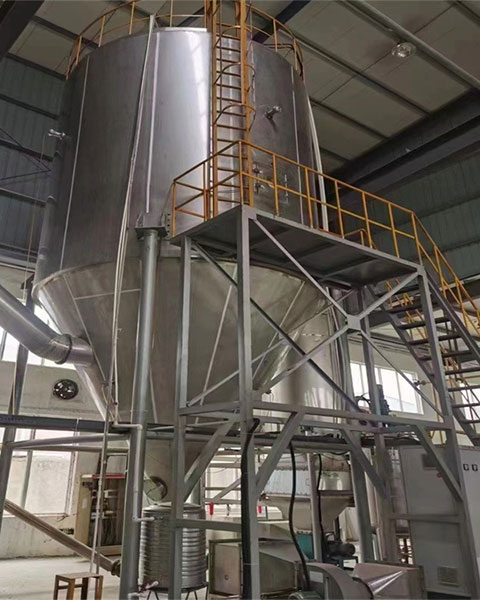
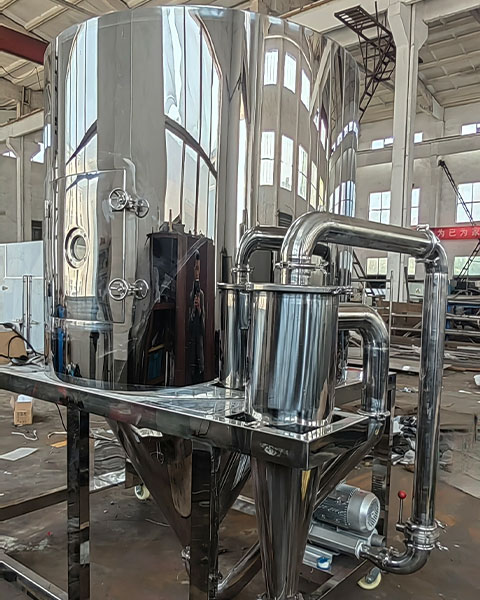
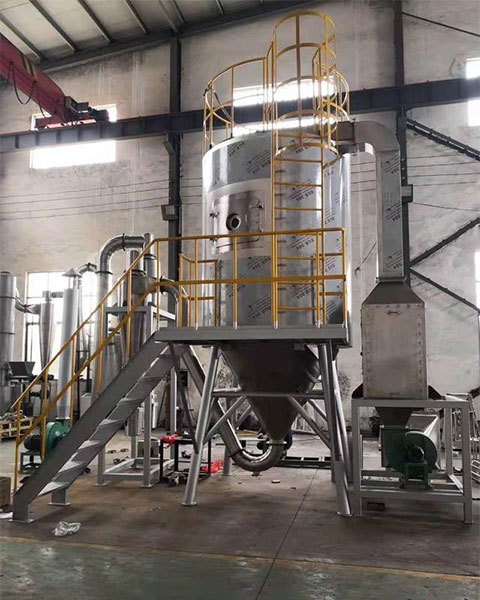
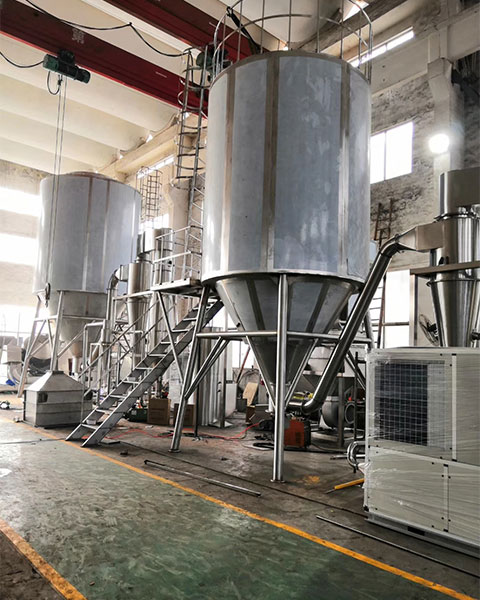
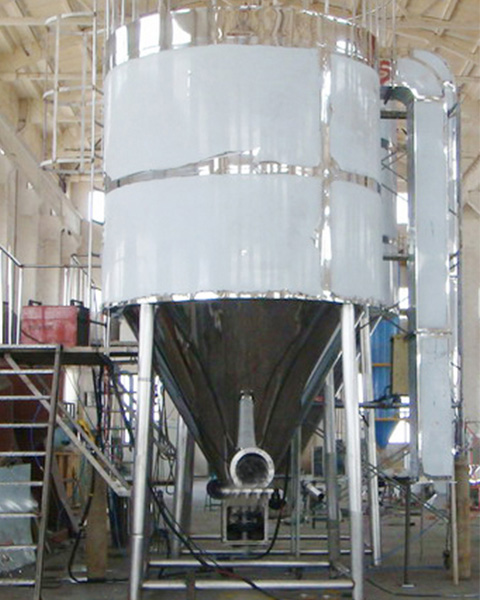
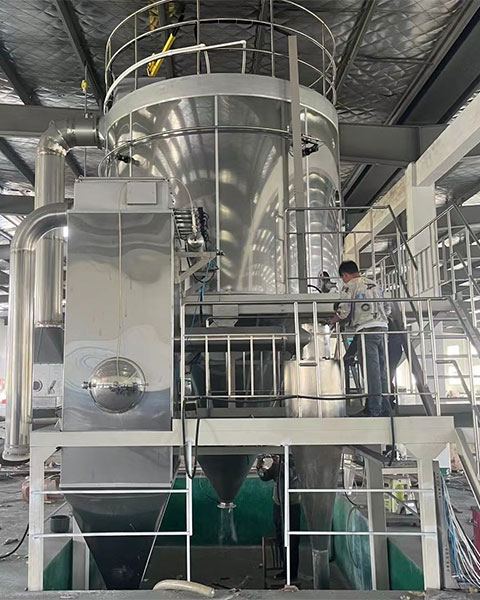
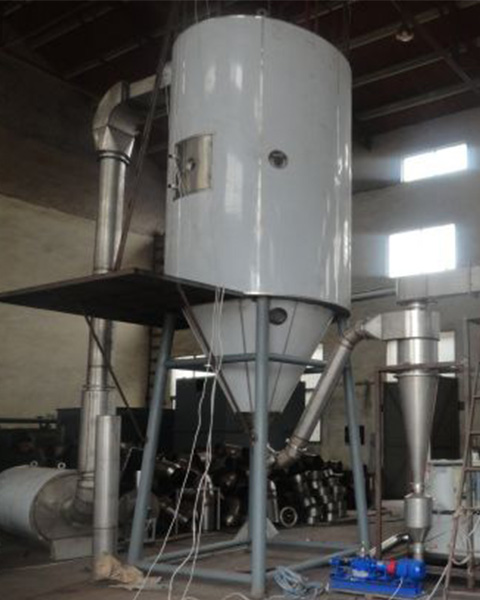
LPG-High Speed Centrifugal Spray Dryer
Centrifugal Industrial Spray Dryer
Spray Dryer Equipment Supplier And Manufactures
Fob Price:USD9000~USD300000
Supply Ability:5 sets / month
Mini Quantity:1 set
Port: Shanghai Port
Payment Terms:T/T, L/C at sight
Size:Different size according to the machine
Material:Stainless steel, Carbon steel
Clients:□supplier ▲manufacturer ▲company ▲factory ▲distributor ▲agent ▲final user
product introduction
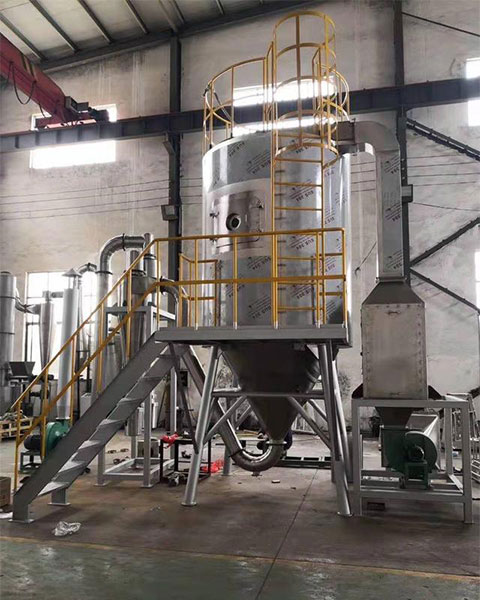
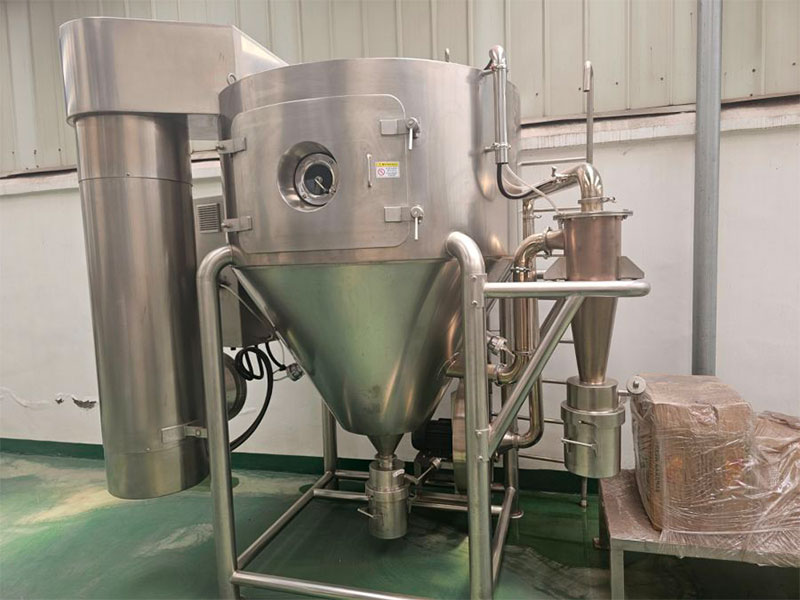
Spray drying is a widely used process in the liquid process forming and drying industry.^ Suitable for producing powdery and granular solid products from solutions, emulsions, suspensions and pasty liquid raw materials. Therefore, spray drying is an ideal process when the particle size distribution, residual moisture content, bulk density and particle shape of the finished product must meet the standard of ^.
working principle
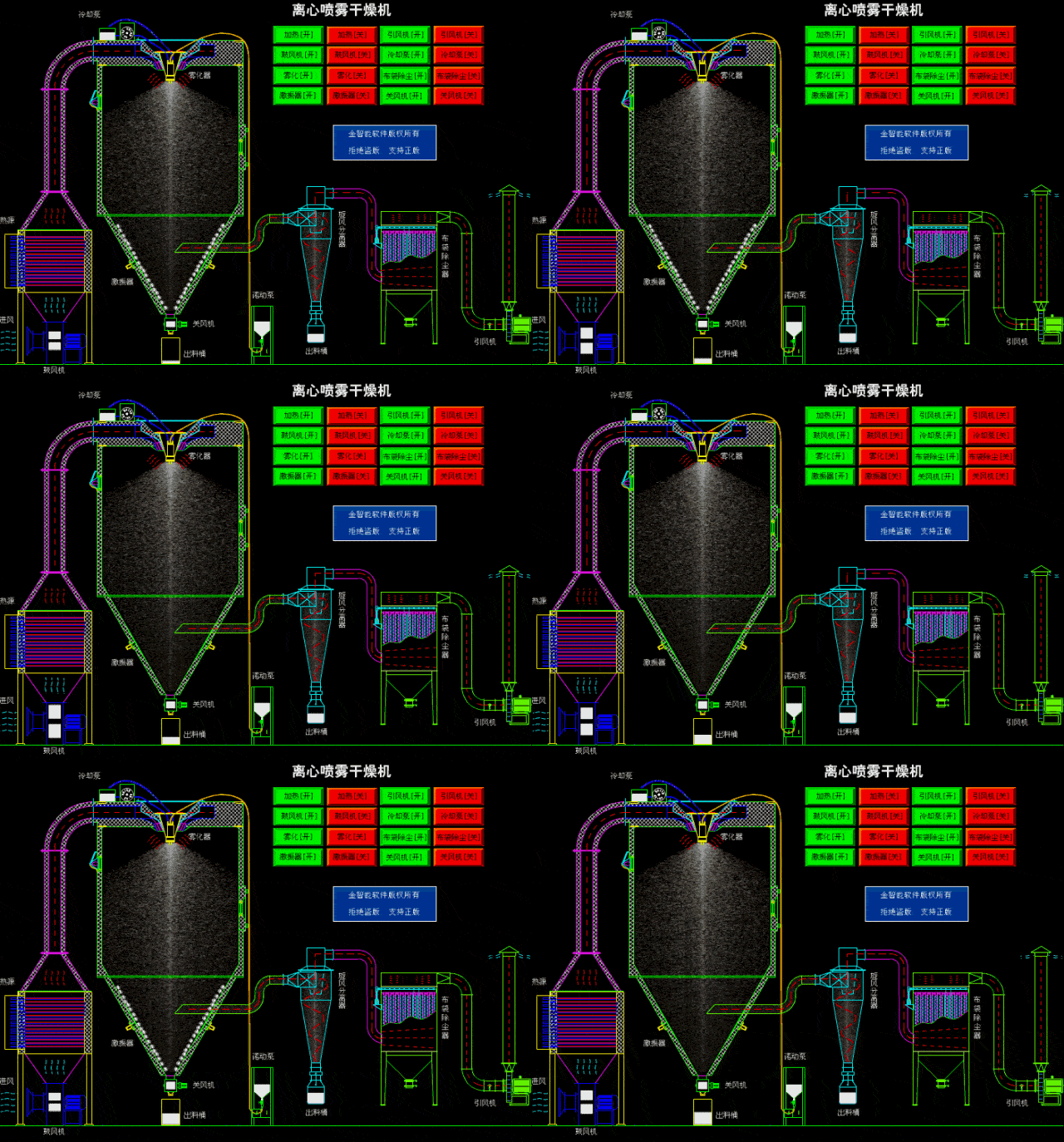
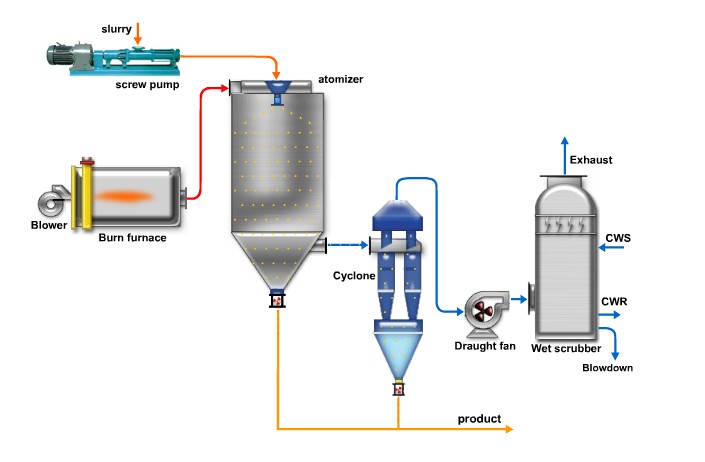
The air is filtered and heated and enters the air distributor at the top of the dryer. The hot air enters the drying chamber evenly in a spiral shape. The feed liquid is sprayed (rotated) into extremely fine mist liquid beads through a high-speed centrifugal atomizer at the top of the tower body, and can be dried into finished products in a very short time when it comes into parallel contact with hot air. The finished product is continuously output from the bottom of the drying tower and from the cyclone separator, and the exhaust gas is evacuated by a fan.
performance characteristics
◎ The drying speed is fast. The surface area of the material liquid is greatly increased after atomization. In the hot air flow, 95%-98% of the water can be evaporated instantly. The drying time only takes a few seconds. It is especially suitable for drying heat-sensitive materials.
◎ The product has good uniformity, fluidity and solubility, high purity and good quality.
◎ The production process is simplified and the operation and control are convenient. For liquids with a moisture content of 40-60%(up to 90% for special materials), it can be dried into powder products at one time. After drying, there is no need to crush and screen, which reduces production processes and improves product purity. The product particle size, bulk density, and moisture content can be adjusted within a certain range by changing operating conditions, making it convenient to control and manage.
Adapt materials
Chemical industry: sodium fluoride (potassium), basic dye pigments, dye intermediates, compound fertilizers, formaldehyde silicic acid, catalysts, sulfuric acids, amino acids, white carbon black, etc.
Plastic resins: AB, ABS emulsion, urea-formaldehyde resin, phenolic resin, dense glue (urea) formaldehyde resin, polyethylene, polyvinyl chloride, etc.
Food industry: Fat-rich milk powder, gelatin, cocoa milk powder, milk substitute, hunting blood powder, egg white (yellow), etc.
Food and plants: oats, chicken juice, coffee, instant tea, flavored meat, protein, soybean, peanut protein, hydrolysate, etc.
Sugar: corn steep liquor, corn starch, glucose, pectin, maltose, potassium sorbate, etc.
Ceramics: alumina, ceramic tile materials, magnesium oxide, talcum powder, etc.
technical specifications
| Model/Project/Parameters | 5 | 25 | 50 | 150 | 200-2000 |
| inlet temperature | 140-350 Automatic Control | ||||
| outlet temperature | 80-90 | ||||
| Water ^Large evaporation capacity (kg/h) | 5 | 25 | 50 | 150 | 200-2000 |
| Centrifugal spray head transmission form | compressed air drive | mechanical transmission | |||
| ^High speed (r.p. m) | 25000 | 18000 | 18000 | 15000 | 8000-15000 |
| Spray disk diameter (mm) | 50 | 120 | 120 | 150 | 180-240 |
| heat source | electrical | Steam + electricity | Steam + electricity, fuel oil, gas, hot blast stove | ||
| Electric heating ^High power (kw) | 9 | 36 | 72 | 99 | |
| Overall size (length × width × height)(m) | 1.8×0.93×2.2 | 3×2.7×4.26 | 3.5×3.5×4.8 | 5.5×4×7 | Determine according to actual situation |
| Dry powder recovery ( %) | ≥95 | ||||
Note: Water evaporation is related to the characteristics of the material and the hot inlet air and outlet temperatures. When the outlet temperature is 90oC. The water evaporation curve is shown in the above figure (for selection reference). As the product continues to be updated, relevant parameters are subject to change without prior notice.
Order Instructions
◎ Name and physical properties of the feed liquid: solid content (or water content), viscosity, surface tension, PH value.
◎ Powder capacity after drying, allowable residual water content, particle size, allowable high temperature.
◎ Output, daily class opening time.
◎ Available energy: available steam pressure, capacity, which can be used for coal, oil, and gas.
◎ Control requirements: Whether inlet and outlet temperatures need to be controlled automatically.
◎ Powder collection requirements: Whether to install bag traps, environmental requirements for exhaust emissions.
◎ Other special requirements.
technical specifications
| size | A | B | C | D | E1 | E2 | F | G | H | I |
| LPG-25 | 1290 | 3410 | 4260 | 1800 | 1200 | 1200 | 1000 | 1700 | 1300 | 1550 |
| LPG-50 | 1730 | 4245 | 5100 | 2133 | 1640 | 1640 | 1250 | 1750 | 1800 | 1600 |
| LPG-100 | 2500 | 5300 | 6000 | 2560 | 2100 | 2100 | 1750 | 1930 | 2600 | 1780 |
| LPG-150 | 2800 | 6000 | 7000 | 2860 | 2180 | 2180 | 1970 | 2080 | 3050 | 1960 |
| LPG-200 | 2800 | 6600 | 7300 | 3200 | 2300 | 2300 | 2210 | 2250 | 3050 | 2100 |
| LPG-300 | 2800 | 8000 | 8700 | 3700 | 2800 | 2800 | 2520 | 2400 | 3040 | 2250 |
Shipping & Customer Site:
Our factory have more experience for shipping big spray dryer equipment by frame container, and guide installation and commissioning to customer local.
Our Spray dryer equipment have exported to worldwide, especially in Indonesia, Malaysia, Thailand, India, Iran, Syria, Saudi Arab, Korea, Russia, Uzbekistan, South Africa, Australia, New Zealand, Mexico, Columbia, Chile, Paraguay, Brazil, Argentina, Czech, Holland, and etc. Our main customer as follows:
Our Services:
24 hours online service
Enquiry will be replied in 2 hours
One year warranty
OEM & ODM are available
Free parts for any breakdown with convincing eviden
Our Advantages:
1. High quality and 20 years experience professional manufacturer of Spray dryer equipment
2. Our factory is certificated by BV,GMC,TUV SGS
3. Our factory is certified by ISO9001:2008 & ISO14001:2004
4. Short lead time
5. Good after-sale service
6. Overseas guide installation and commissioning
FAQs:
1. Are you manufacturer or trading company?
We are manufacturer 20 years experience professional manufacturer of dryer equipment,mixer equipment,granulator equipment.
2. Where is your factory located?
Our factory located in Changzhou City,Jiangsu Province,near in Shanghai.Form Shanghai Pudong airprot to our factory is about 260Km,it need about 3 hours by car.
3. If can make a testing in your factory?
Sure,our factory have Spray dryer equipment for testing, you can take 5~10kgs raw material to our factory for testing.
4. How Can I select the right Spray dryer equipment ?
We will help you choose the right type and model for Spray dryer equipment, by knowing the following information:
a.> Liquid name and property: Solid contents(or water contents), viscosity , surface tension and PH value.
b.> Dried powder density residual water contents allowed, particle size, and maximum temperature allowed.
c.> Output capacity: shift time daily .
d.> Energy that can be supplied: steam pressure, electricity properly , fuel of coal, oil and natural gas .
e.> Control requirement: whether or not the inlet and outlet temperatures should be controlled.PLC or button type,electric compnent brand require.
f.> Powder collection requirement: whether it’s necessary to use cloth bag ilter and the requirement of the environment of the exhausted gas .
g.> Other special requirements.