
 en
en


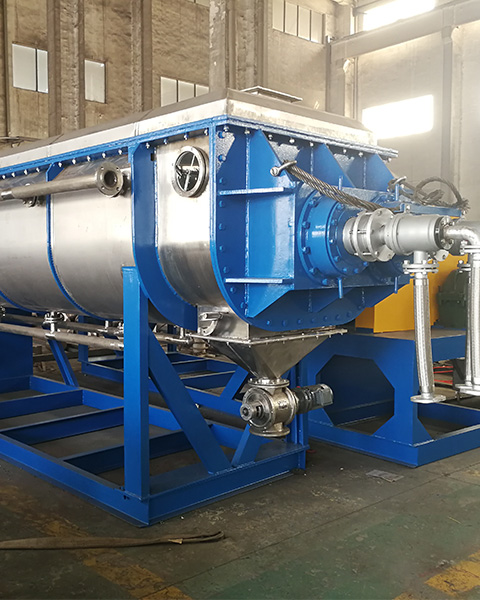
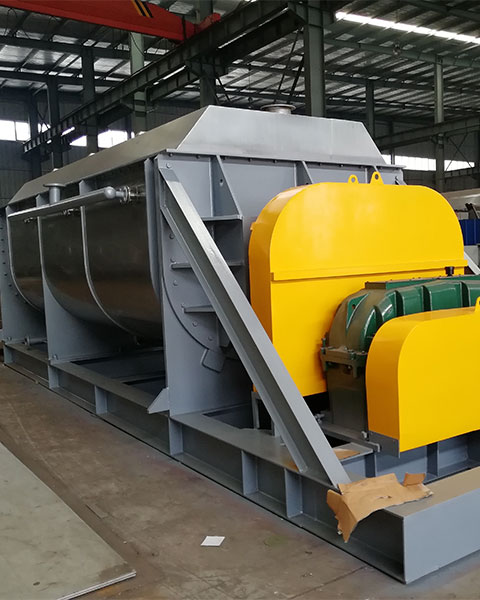
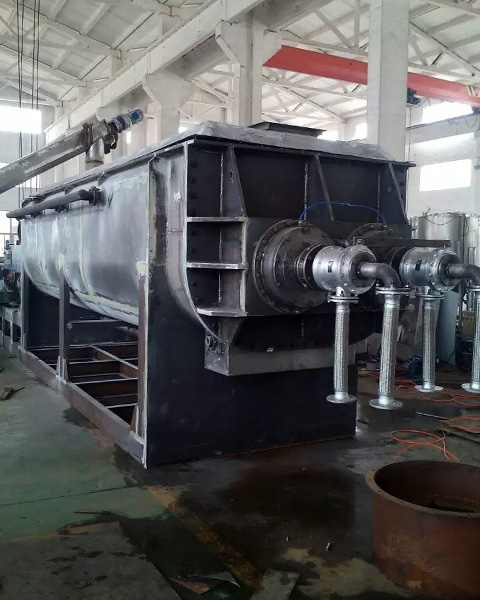
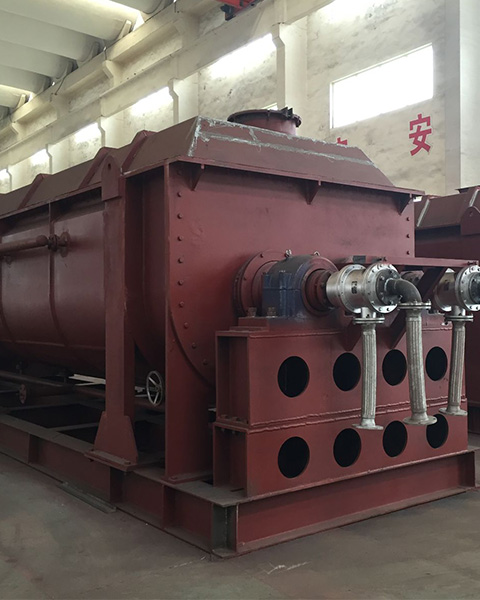
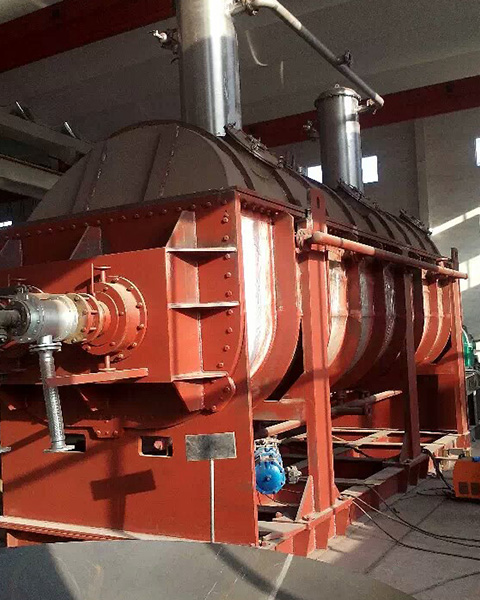
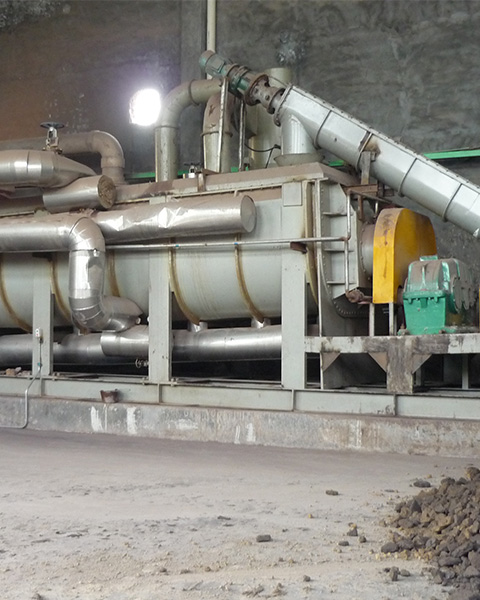
JYG-Hollow paddle dryer
product introduction
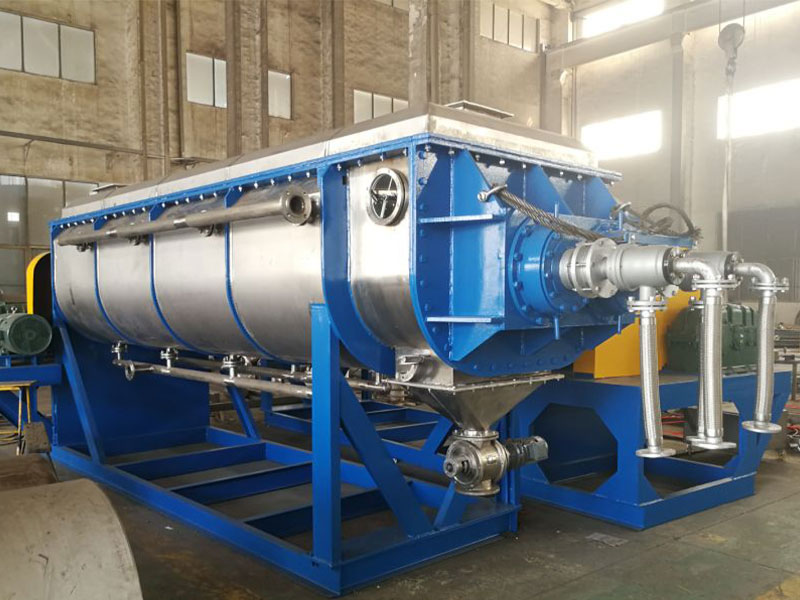
This product can indirectly heat or cool paste, granular, powder, and slurry materials, and can complete unit operations such as drying, cooling, heating, sterilization, reaction, and low-temperature combustion. The special wedge-shaped stirring heat transfer blades in the equipment have high heat transfer efficiency and self-cleaning function of the heat transfer surface.
working principle
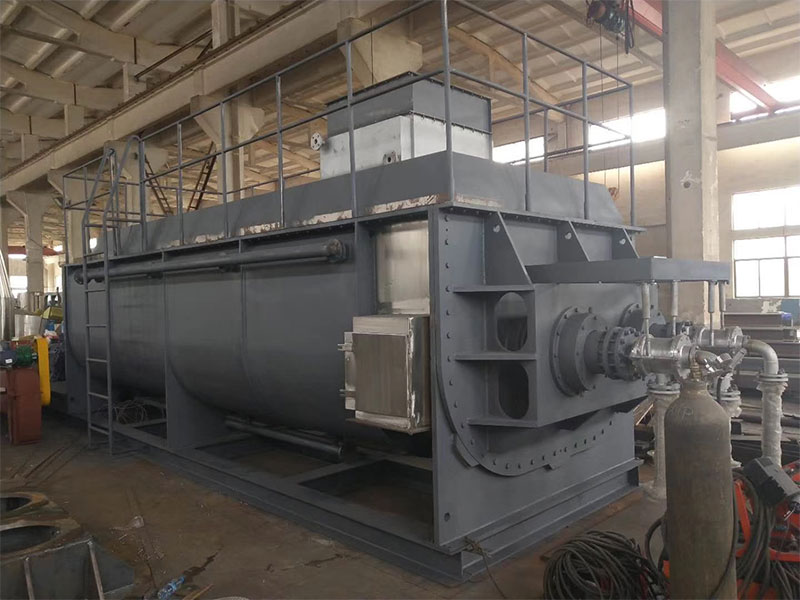
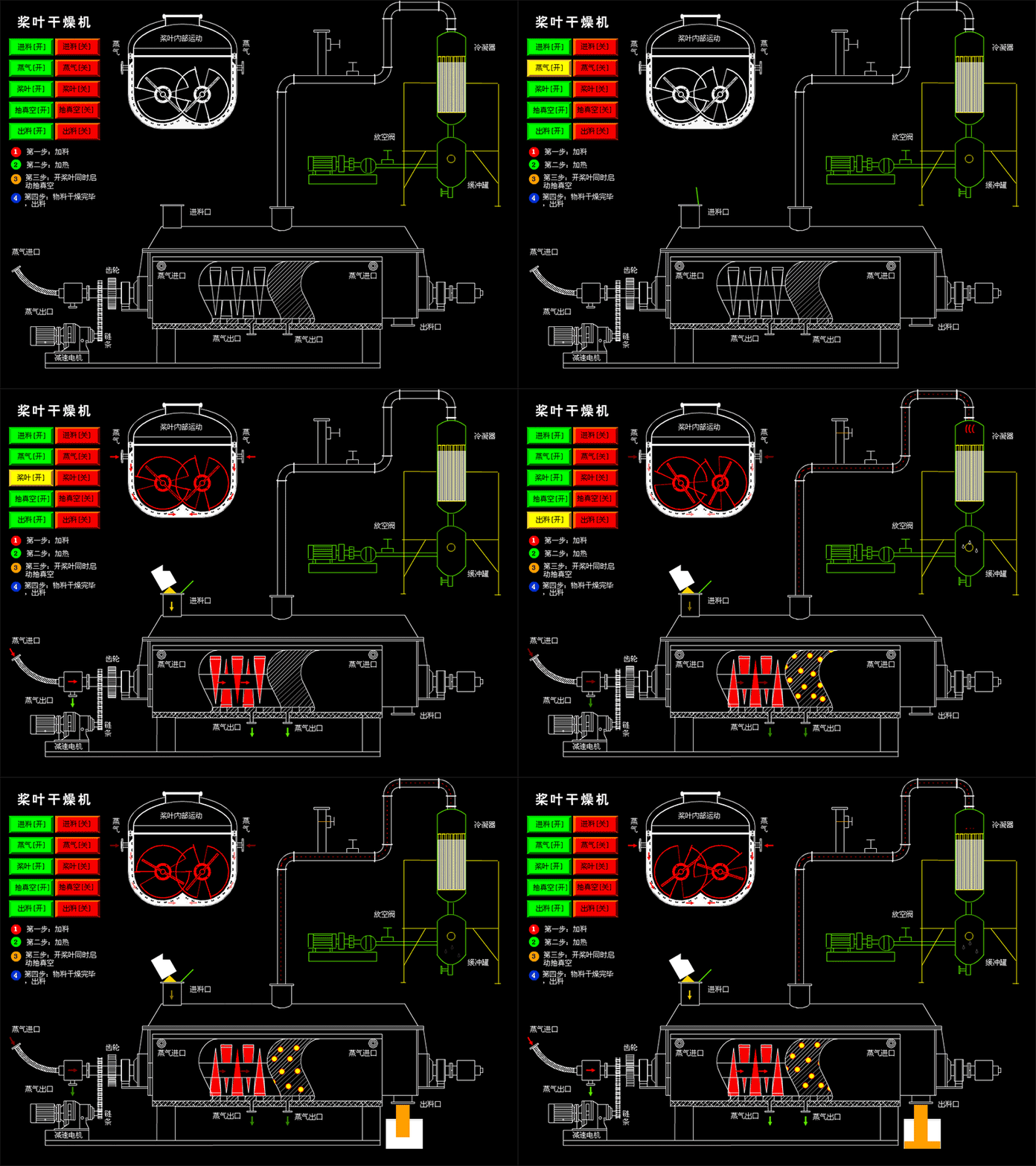
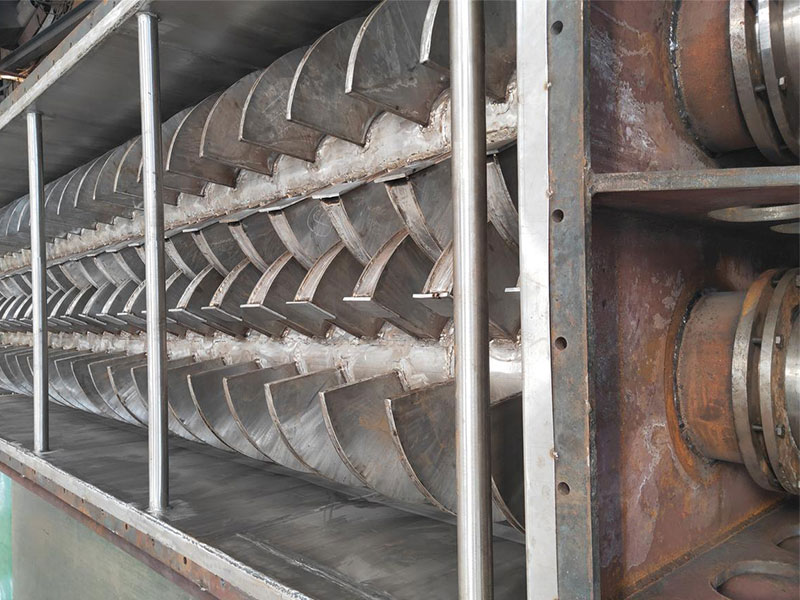
Wedge hollow blades are densely arranged on the hollow shaft, and the heat medium flows through the blades through the hollow shaft. The heat transfer area per unit effective volume is very large, and the temperature of the heat medium ranges from-40℃ to 320℃. It can be water vapor or liquid type: such as hot water, heat transfer oil, etc. Indirect conductive heating does not carry air to carry away heat, and the heat is used to heat the material. The heat loss is only the heat dissipation to the environment through the insulation layer of the body. The wedge blade heat transfer surface has a self-cleaning function. The relative movement of the material particles and the wedge surface produces a washing effect, which can wash away the adhered materials on the wedge surface, so that a clean heat transfer surface is always maintained during operation. The shell of the blade dryer is Omega shaped, and two to four hollow mixing shafts are generally arranged in the shell. The shell has a sealed end cover and an upper cover to prevent material dust from leaking out and fully play its role.
The heat transfer medium flows through the casing jacket and the hollow stirring shaft through the rotating joint. The hollow stirring shaft has different internal structures depending on the type of heat medium to ensure good heat transfer effect.
performance characteristics
◎ Low energy consumption of pulp leaf dryer: Due to indirect heating, there is no large amount of air carried to carry away heat, and an insulation layer is arranged on the outer wall of the dryer. For pulp materials, only 1.2kg of water vapor is needed to evaporate 1kg of water.
◎ Low cost of the pulp dryer system: With a huge heat transfer surface per unit effective volume, the processing time is shortened and the equipment size is reduced. The building area and building space are greatly reduced.
◎ A wide range of materials processed: Using different heat media, you can process both heat-sensitive materials and materials that need high temperature treatment. Commonly used media include: water vapor, heat transfer oil, hot water, cooling water, etc.
It can be operated continuously or intermittently, and can be used in many fields.
Little environmental pollution: no use of air, dust material entrainment is very small. Material solvent evaporation is very small, easy to handle. For contaminated materials or conditions requiring solvent recovery, use
Closed circulation.
◎ Low operating costs: structure. The amount of wear is small and the maintenance cost is very low.
◎ Stable operation: Due to the special compression-expansion and stirring effect of the wedge-shaped paddle blades, the material particles are fully in contact with the heat transfer surface. In the axial range, the temperature, humidity, and mixing degree gradient of the material are small, thus ensuring the stability of the process.
Adapt materials
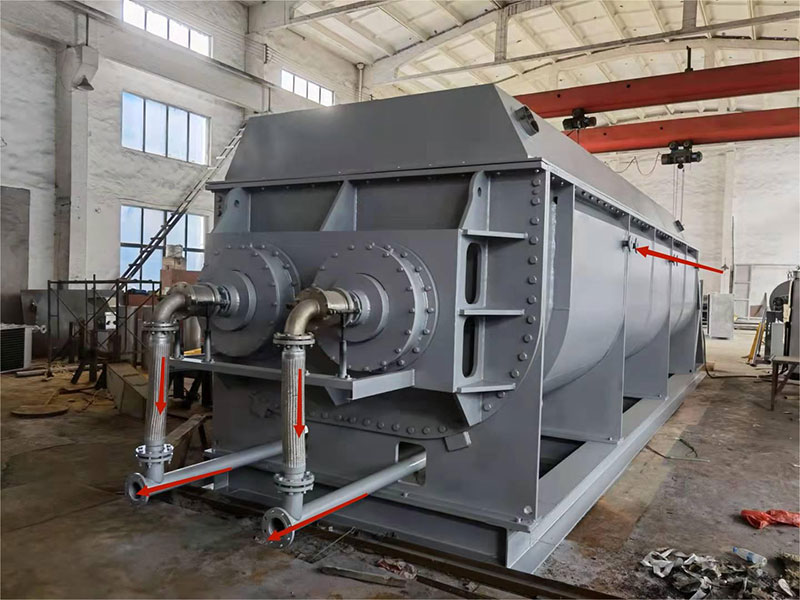
Pulp leaf dryers have been successfully used in food, chemical, petrochemical, dye, industrial sludge and other fields. The heat transfer, cooling, and stirring characteristics of the equipment allow it to complete the following unit operations: combustion (low temperature), cooling, drying (solvent recovery), heating (melting), reaction and sterilization. The stirring blades are also heat transfer surfaces, which increases the heat transfer area per unit effective volume and shortens the processing time. The wedge blade heat transfer surface also has a self-cleaning function. Compression-expansion stirring function allows materials to be mixed evenly. The material moves in a "plug flow" along the axial direction. In the axial interval, the temperature, humidity, and mixing degree gradient of the material is very small. Using heat transfer oil as the heat medium, the blade dryer can complete low-temperature combustion work. For example, calcium sulfate dihydrate (Ca2SO4·2H2O) is burned and converted into calcium sulfate hemihydrate (Ca2SO4·1/22H2O). Sodium bicarbonate (NaHCO3) is converted into soda ash (Na2HCO3) and the like after calcination. Pour in a cooling medium, such as water, cooling salt water, etc., and can be used for cooling. For example, the pulp-leaf soda cooler used in the soda ash industry replaces the old air-cooled soda cooler, saving energy and tail gas treatment equipment and reducing operating costs. Drying, the main function of the equipment ^does not use hot air, making solvent recovery, energy consumption, and environmental control in an ideal state that is easy to handle. It is especially suitable for materials that require recycling of solvents and are flammable and easily oxidizable. It has been widely used in fine chemical, petrochemical, and dye industries. In the axial range, the uniformity of temperature, humidity, and degree of mixing allows the equipment to be used to heat or melt, or to carry out some solid material reactions. It has been successfully used in compound fertilizer and modified starch industries. Leaf pulp dryers can be used to sterilize food and flour. The large heating area per unit effective volume quickly heats the material to the sterilization temperature, avoiding long-term heating and changing the quality of the material.
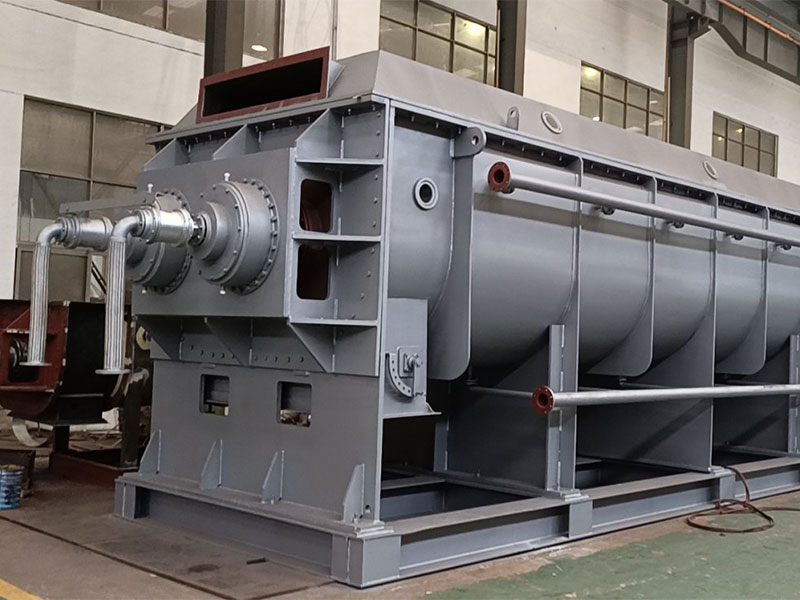
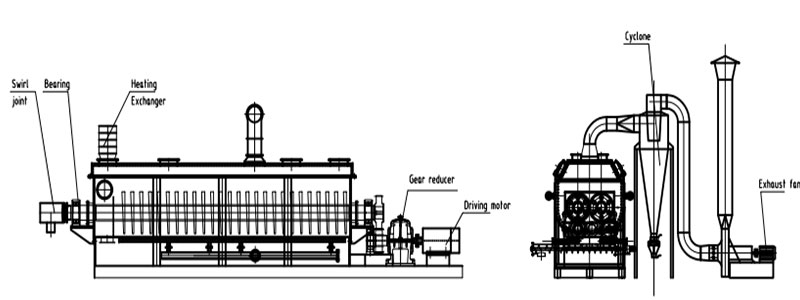
Installation structure schematic diagram
technical specifications
| Project/Model | JYG3 | JYG9 | JYG13 | JYG18 | JYG29 | JYG41 | JYG52 | JYG68 | JYG81 | JYG95 | JYG110 |
| Heat transfer area (m2) | 3 | 9 | 13 | 18 | 29 | 41 | 52 | 68 | 81 | 95 | 110 |
| Effective volume (m3) | 0.06 | 0.32 | 0.59 | 1.09 | 1.85 | 2.8 | 3.96 | 5.21 | 6.43 | 8.07 | 9.46 |
| Speed range (rmp) | 15-30 | 10-25 | 10-25 | 10-20 | 10-20 | 10-20 | 10-20 | 10-20 | 5-15 | 5-15 | 5-10 |
| Power (kw) | 2.2 | 4 | 5.5 | 7.5 | 11 | 15 | 30 | 45 | 55 | 75 | 95 |
| Body width A(mm) | 306 | 584 | 762 | 940 | 1118 | 1296 | 1476 | 1652 | 1828 | 2032 | 2210 |
| Overall width B(mm) | 736 | 841 | 1066 | 1320 | 1474 | 1676 | 1854 | 2134 | 1186 | 2438 | 2668 |
| Body width C(mm) | 1956 | 2820 | 3048 | 3328 | 4114 | 4724 | 5258 | 5842 | 6020 | 6124 | 6122 |
| Overall length D(mm) | 2972 | 4876 | 5486 | 5918 | 6808 | 7570 | 8306 | 9296 | 9678 | 9704 | 9880 |
| Material inlet and outlet distance E(mm) | 1752 | 2540 | 2768 | 3048 | 3810 | 4420 | 4954 | 5384 | 5562 | 5664 | 5664 |
| Center height F(mm) | 380 | 380 | 534 | 610 | 762 | 915 | 1066 | 1220 | 1220 | 1220 | 1220 |
| Overall height H(mm) | 762 | 838 | 1092 | 1270 | 1524 | 1778 | 2032 | 2362 | 2464 | 2566 | 2668 |
| Steam inlet N(inch) | 3/4 | 3/4 | 1 | 1 | 1 | 1 | 11/2 | 11/2 | 11/2 | 11/2 | 2 |
| Water outlet O(inch) | 3/4 | 3/4 | 1 | 1 | 1 | 1 | 11/2 | 11/2 | 11/2 | 11/2 | 2 |
The hollow blade dryer equipment can indirectly heat or cool paste, granular, powder, and slurry materials, and can complete unit operations such as drying, cooling, heating, sterilization, reaction, and low-temperature combustion. The special wedge-shaped stirring heat transfer blades in the equipment have high heat transfer efficiency and self-cleaning function of the heat transfer surface. Paddle dryers are divided into hot air dryers and conduction dryers