
 en
en


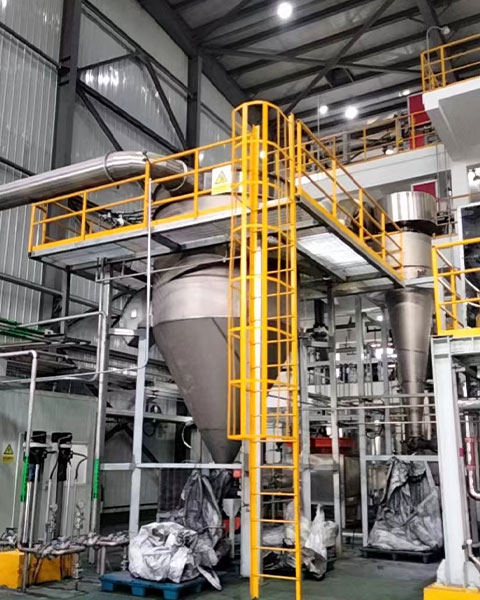
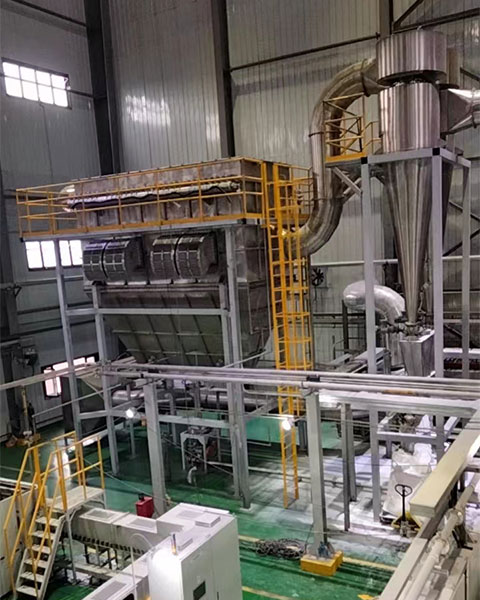
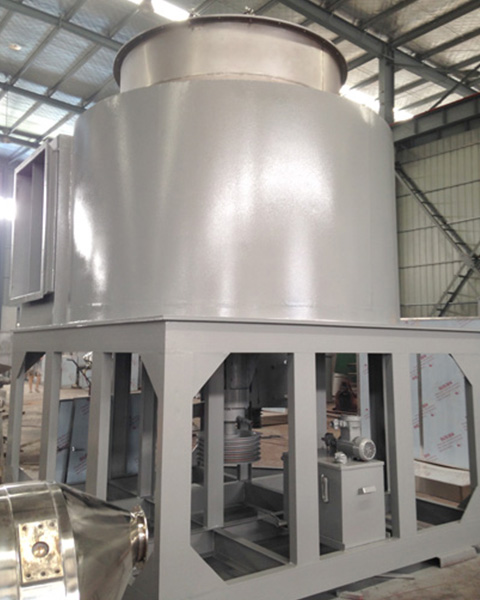
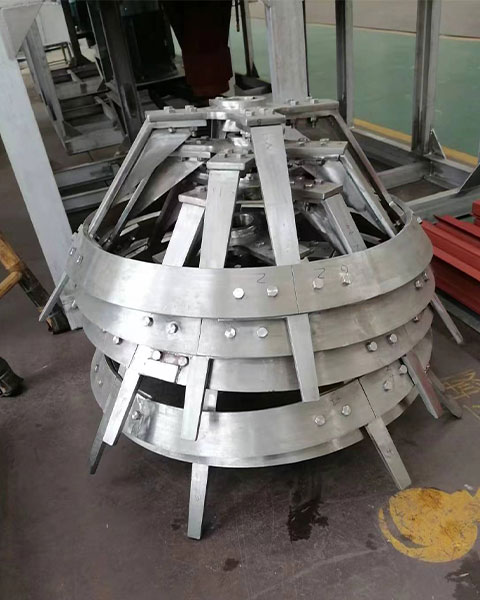
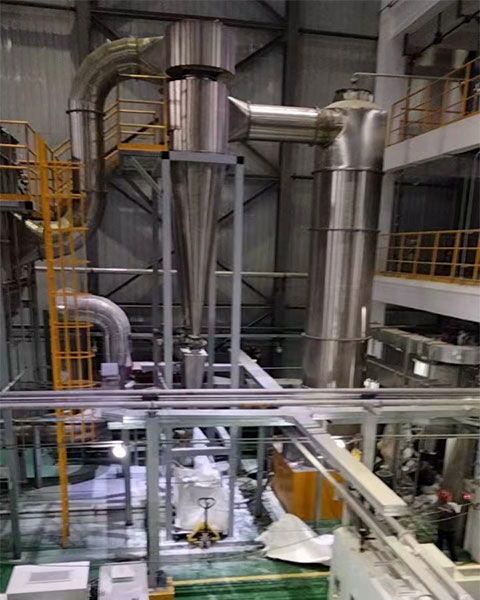
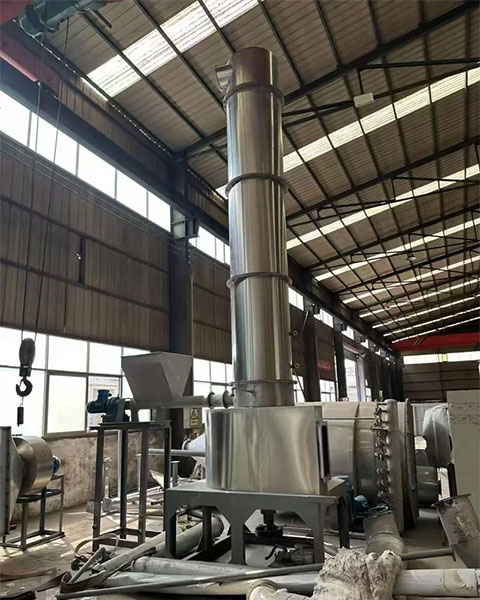
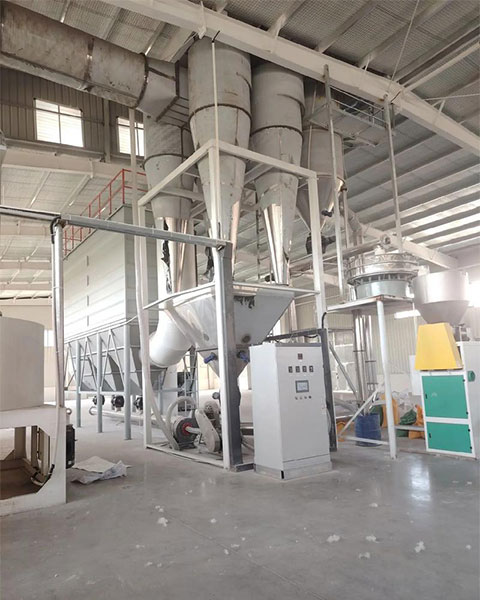
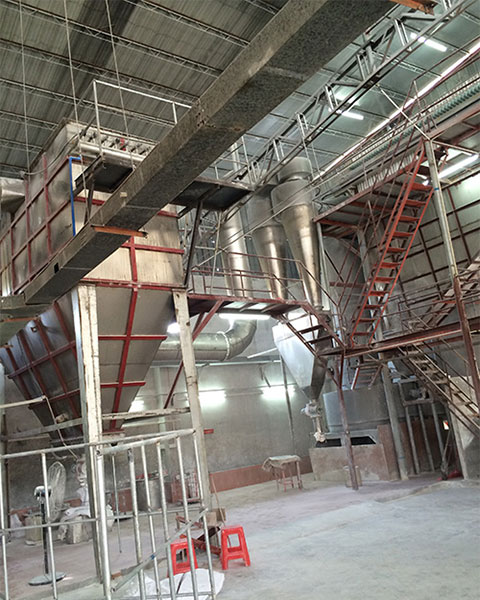
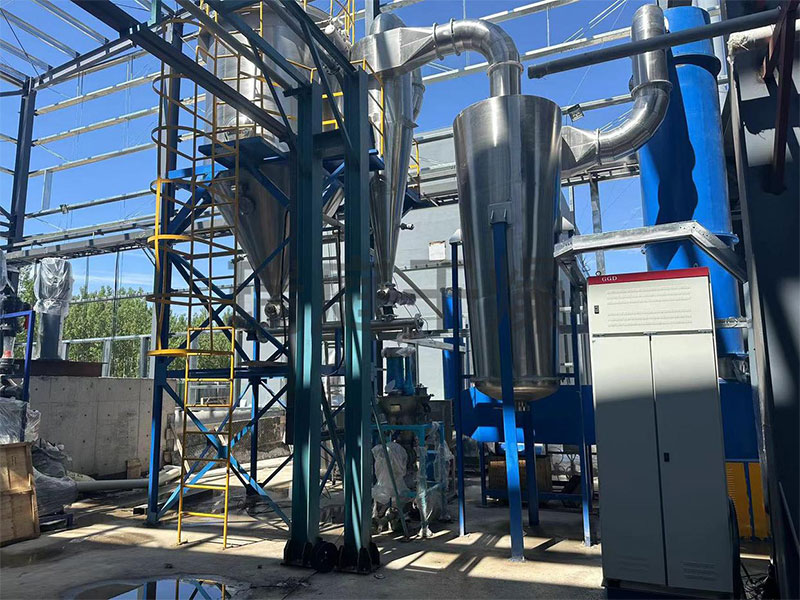
XSG-rotary flash dryer
working principle
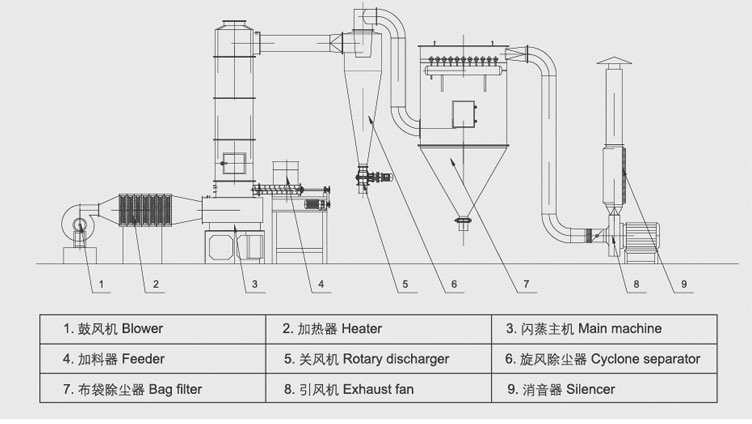
Hot air tangentially enters the bottom of the dryer and is driven by the agitator to form a powerful rotating wind field. The paste material enters the dryer from the screw feeder. Under the strong action of the high-speed rotating stirring paddle, the material is dispersed under the action of impact, friction and shear force. The block material is quickly crushed, fully contacted with the hot air, heated, and dried. The dehydrated dry material rises with the hot air flow. The classification ring retains the large particles. The small particles are discharged out of the dryer from the center of the ring and recovered by the cyclone separator and the dust remover. The dry or large materials are thrown towards the wall of the device by centrifugal force., fall back to the bottom and are crushed and dried.
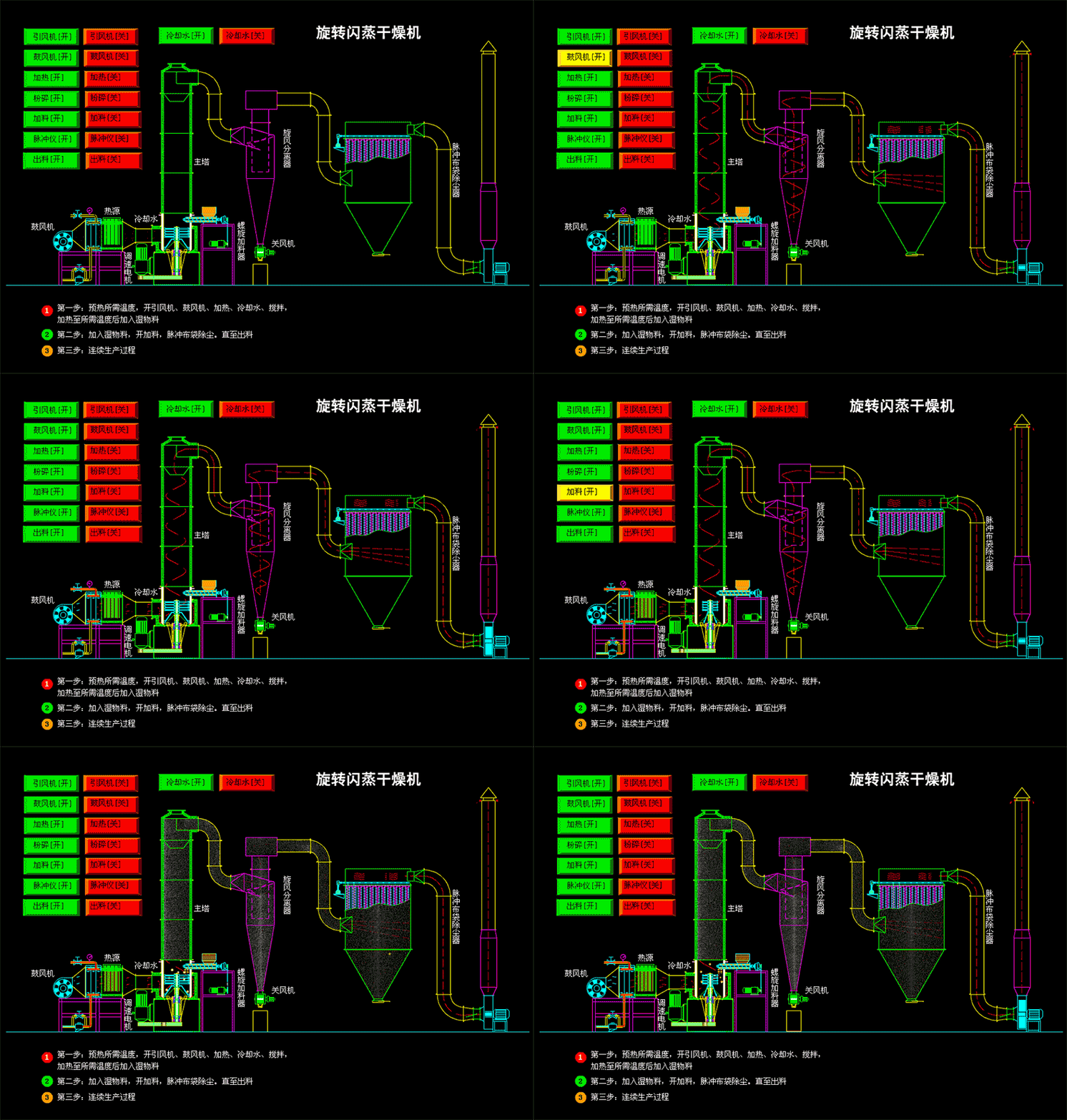
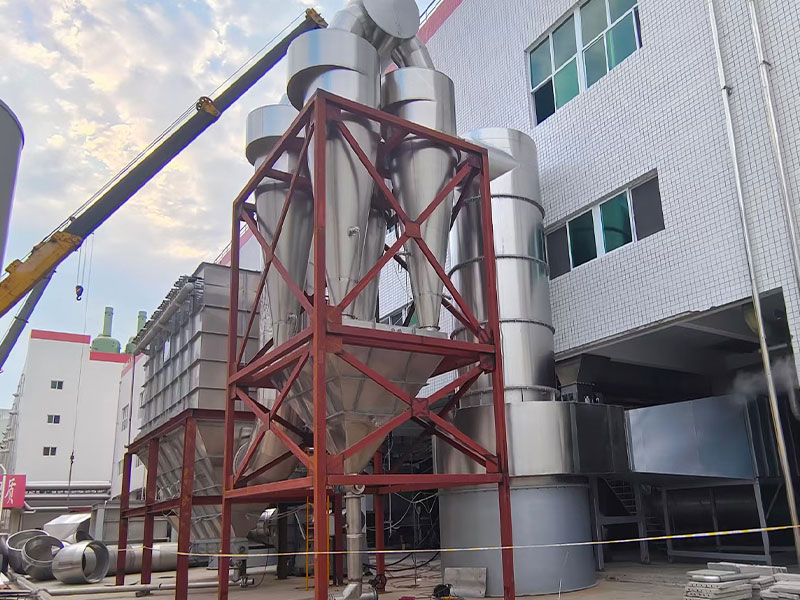
schematic structural diagram
performance characteristics
Organic combination of cyclone, fluidization, spouting and crushing classification technology.
◎ Compact equipment, small size, high production efficiency, continuous production, realizing "small equipment, large production."
◎ High drying intensity, low energy consumption and high thermal efficiency.
◎ The material retention time is short, the finished product is of good quality, and can be used for drying heat-sensitive materials.
◎ Negative pressure or micro-negative pressure operation has good tightness, high efficiency, and eliminates environmental pollution.
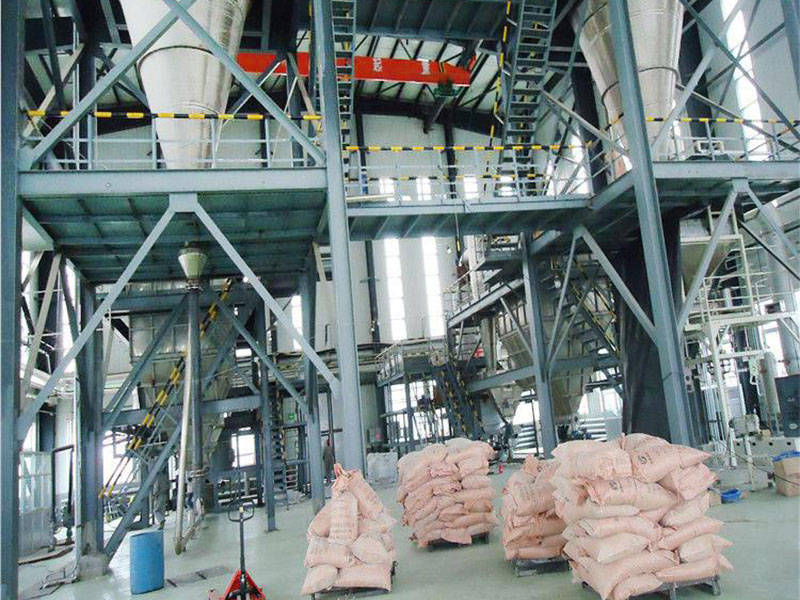
Adapt materials
Organic matter: atrazine (pesticide), lauric acid, benzoic acid, benzoic acid, germicidal acid, sodium oxalate, cellulose acetate, organic pigments, etc.
Dyes: anthraquinone, black iron oxide, indigo pigment, butyric acid, titanium hydroxide, zinc sulfide, various azo dye intermediates.
Inorganic substances: Borax, calcium carbonate, hydroxide, copper sulfate, iron oxide, barium carbonate, antimony trioxide, various metal hydroxides, various heavy metal salts, synthetic cryolite, etc.
Food: Soybean protein, gelatinized starch, wine trough, wheat sugar, wheat starch, etc.
technical specifications
| model | XSG-2 | XSG-4 | XSG-6 | XSG-8 | XSG-10 | XSG-12 | XSG-16 | XSG-20 |
| Inner diameter of main machine mm | 200 | 400 | 600 | 800 | 1000 | 1200 | 1600 | 2000 |
| Air volume M3/h | 350-500 | 1150-2000 | 2450-4500 | 4450-7550 | 7000-12500 | 10000-20000 | 18000-36000 | 28200-56500 |
| Evaporated water kg/h | 12-17 | 40-70 | 80-150 | 150-250 | 230-4250 | 300-600 | 600-1000 | 1000-1500 |
| ^Large installed capacity kw | 10 | 20 | 40 | 65 | 85 | 105 | 150 | 230 |
| ^Large height m | 4.0 | 4.8 | 5.8 | 6.5 | 7.1 | 7.8 | 8.8 | 10.1 |
| Floor area m2 | 15 | 20 | 28 | 35 | 40 | 52 | 80 | 150 |
Note: 1. Moisture evaporation is based on the inlet air temperature of 1.80oC, the outlet air temperature is 80oC is the amount of water evaporated per hour,
2. In addition to the above models, special designs can be made for users,
3. The above installed capacity is standard, and the power matching can be significantly reduced depending on different materials.
Materials processed and characteristics (based on Type 6 flash evaporation)
| material name | Stearate | aluminum hydroxide | zinc carbonate | monosultap | TMTD | DSD acid | iron oxide red | antimony dioxide | cuprous chloride | White too black |
| inlet air temperatureoC | 150 | 180 | 150 | 120 | 140 | 150 | 200 | 180 | 200 | 280 |
| Initial moisture content % | 80 | 55 | 80 | 30 | 65 | 60 | 60 | 45 | 30 | 85 |
| Final moisture content % | 0.5 | 1.5 | 1.0 | 1.0 | 0.5 | 0.5 | 0.5 | 1.0 | 3.0 | 5.0 |
| Actual drying capacity kg/h | 140-160 | 250-280 | 130-170 | 80-110 | 80-120 | 80-120 | 300-350 | 280-320 | 290-310 | 250-300 |
| material name | promoter | oil-soluble ink | manganese zinc substitute | phthalocyanine blue | calcium citrate | superfine calcium carbonate | mud treating agent | sodium dioxyisocyanurate | sodium trioxyisocyanurate |
| inlet air temperatureoC | 150 | 150 | 120 | 150 | 140 | 160 | 200 | 180 | 150 |
| Initial moisture content % | 60 | 45 | 30 | 55 | 40 | 70 | 75 | 25 | 30 |
| Final moisture content % | 0.5 | 2.0 | 1.0 | 1.0 | 1.0 | 1.5 | 5.0 | 0.2-2 | 1.0 |
| Actual drying capacity kg/h | 80-110 | 350-380 | 120-150 | 160-180 | 300-350 | 430-470 | 290-310 | 80-120 | 90-150 |
Industrial Stainless Steel Titanium Rotary Spin Flash Dryer